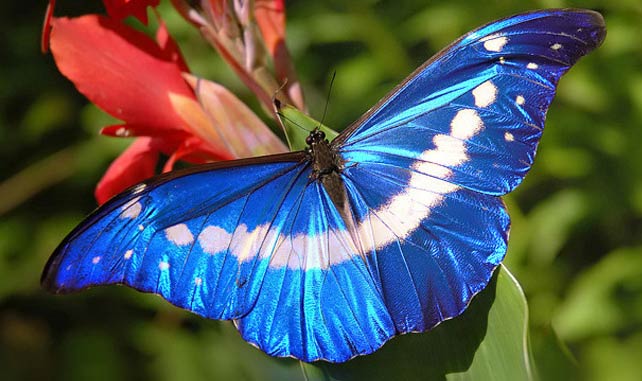
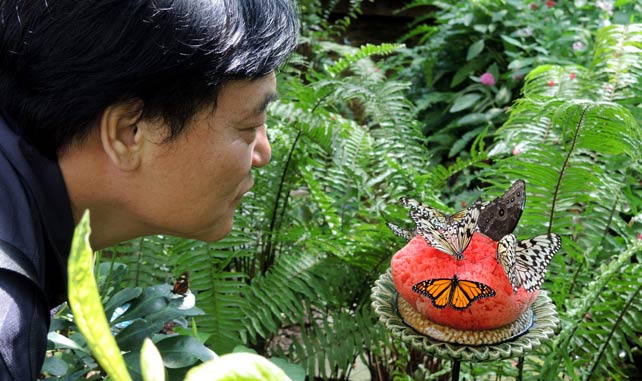
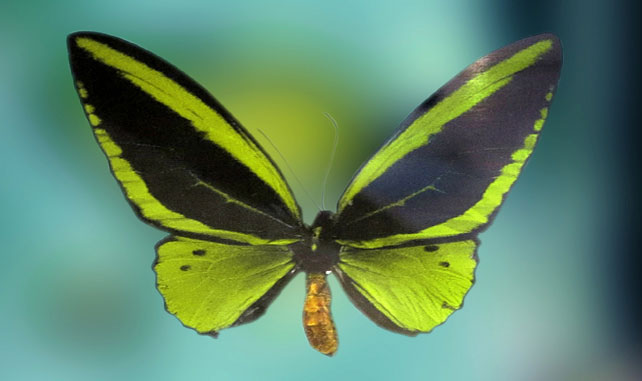
Flight methods in the natural world can generally be categorized into two major types: "bird-like flapping" and "insect-like oscillation" (often distinguished as flapping vs. vibrating). Understanding, mastering, and learning the unique oscillating flight techniques of insects—which birds cannot compare to—has long been a dream of humanity. There are numerous differences between insect oscillation and bird flapping. The primary distinction lies in anatomy and control: insect wings generally possess veins but lack the neurons found in bird wings, nor do insects require a tail for flight control and balance as birds do. Insect wings integrate propulsion, lift, and control into a single unit. They can instantaneously and adaptively adjust their oscillation frequency, amplitude, and angle to cope with airflow changes. Consequently, they are capable of high-maneuverability, long-endurance, and safe flight in various complex environments with extremely low power consumption.
Researchers at Zhuhai NCA have selected representative oscillating insects from the myriad of flying creatures in nature as subjects for long-term study. We have discovered the universality and specificity of their flight mechanisms, fundamentally decoding the mechanics of insect wing oscillation. This research has established a brand-new foundational scientific theory regarding biomimetic fluid dynamics and low-Reynolds-number aerodynamics for biomimetic vibrating-wing aircraft. Furthermore, we have explored feasible implementation technologies and engineering methods, successfully developing multiple equivalent engineering prototypes. In 2004, they obtained original, independent intellectual property patents for the core technology of these biomimetic aircraft.
Today, we are dedicated to developing biomimetic vibrating-wing aircraft suitable for human flight, translating the low-energy, high-maneuverability, and safe flight capabilities of insects into human utility. With the aid of Zhuhai NCA’s biomimetic aircraft, the day when humans can realize the dream of soaring on oscillating wings is not far off.
Aviation technology always stands at the forefront of the era; every leap in flight methodology changes human life and the world. The achievements of this project have opened up a completely new and feasible path to answer the question, "How will humans fly in the future?" The market prospects for Zhuhai NCA’s current commercial technology and other derivative biomimetic vibrating-wing products are evident. There is enormous market demand in application fields such as lightweight single-person flight wings, aircraft for complex environments, vehicles for near-space low-density atmospheres, medium-to-low altitude high-maneuverability long-range aircraft, tri-phibious (sea, land, and air) vehicles, and general aviation aircraft.
 Integrated-wing high
 Robotic gecko &
  Long endurance
  Machine Butterfly,
  "Near Space Pioneer" micro lab
 Transformable airship
 Optical science &
  Commercial Fixed-wing
  Mirror-Array PV (MA-PV)
 Marine engineering equipment
  Underwater lift with large load and lower consumption
  Transformable submarine
 Device for development and utilization of waste heat energy
  Integrated microgrid system
 Device for waste gas (steam) - cleaning
  Climbing robot for highrise fire-fighting

 粤公网安备 44049002000305号